Personal Bank Redesign
project overview
client:
HangSeng Bank
services:
UXUI Redesign
industry:
Bank
role:
Assistant UXUI Manager
About
Hang Seng Bank serves nearly 4 million customers, with 2.5 million registered digital banking users.
At this scale, we partnered with their internal design team to lead a comprehensive redesign of the personal eBanking experience — covering mobile app and web from UX architecture to visual language, building a modern digital banking experience worthy of one of Hong Kong's most trusted financial institutions.
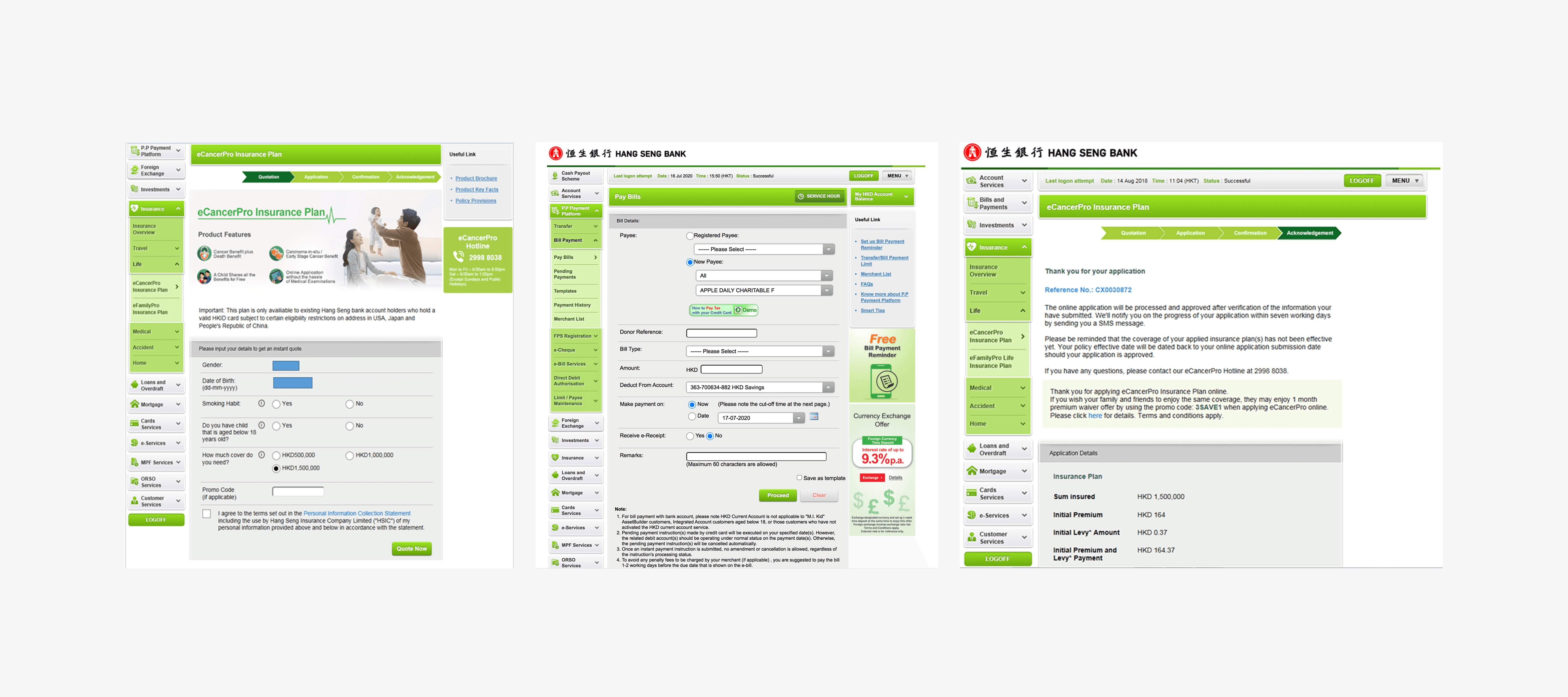
Why
Digital banking, redefined for scale
Customer behaviour had decisively shifted digital. Personal eBanking users grew 8% year-on-year, while mobile banking active users surged 38% — a signal that not just adoption, but daily reliance on the platform was accelerating.
With scale and frequency both rising, the existing interface was no longer sufficient. Customers needed something simpler, faster, and more intuitive. The redesign wasn't optional — it was the foundation for Hang Seng's next chapter in digital banking.
Challenge
Redesigning trust at scale
Rebuilding a banking app from the ground up is never just a design problem.
With 2.5 million active users, the stakes of getting it wrong were unusually high. Familiarity was both an asset and a constraint — customers trusted the existing experience precisely because they knew it. Modernising too aggressively risked alienating the very users we were designing for.
not just building interfaces, but designing Banking experiences that people actually dare to use.
Before Design
Before a single screen was designed
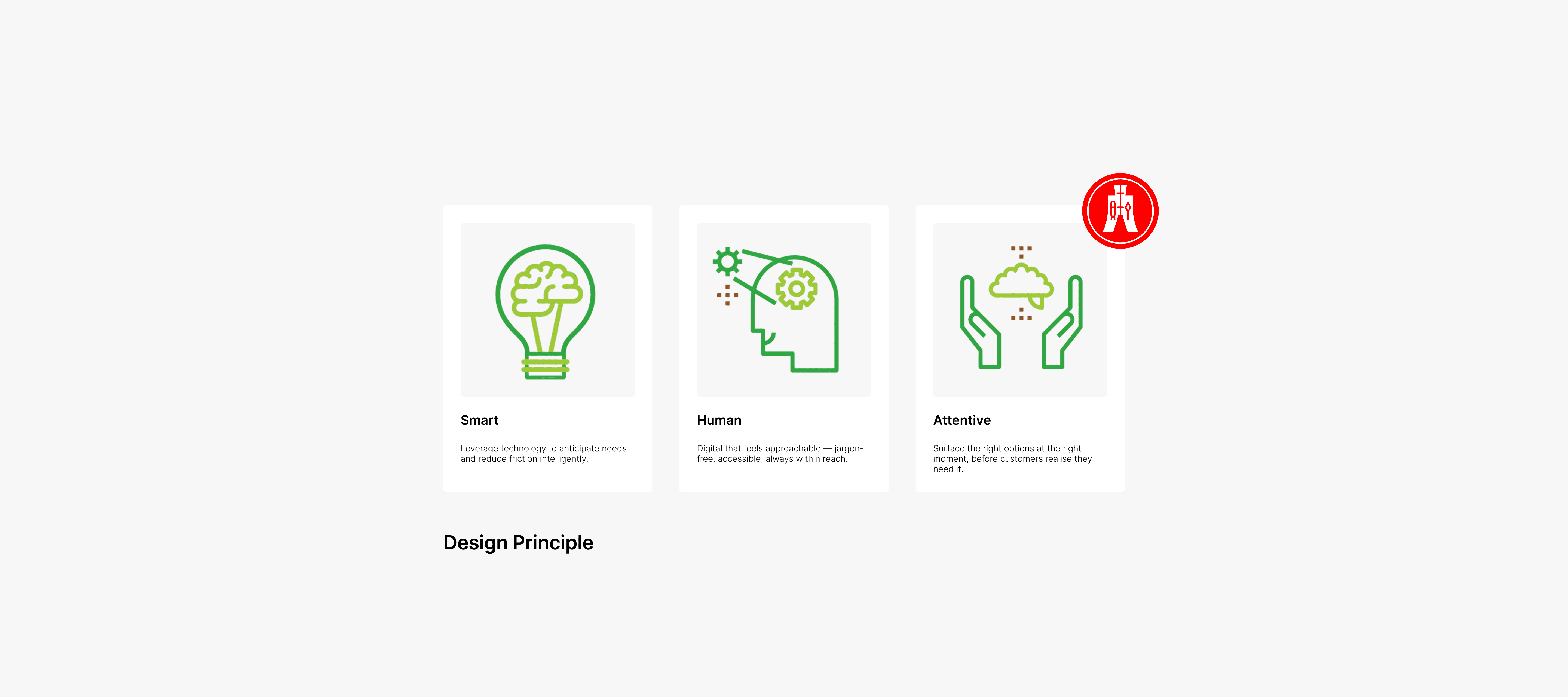
The first task wasn't designing — it was aligning. We established three core design principles to give both teams a shared language for every decision that followed.
Smart: Anticipate needs, reduce friction, personalise intelligently.
Human: Accessible, jargon-free, always with a human touch within reach.
Attentive: Surface the right options at the right moment, before customers realise they need it.
These principles weren't decorative. They became the framework for resolving design decisions and keeping the experience rooted in real user needs throughout the entire engagement.
HOW DID WE IMPROVE IT?
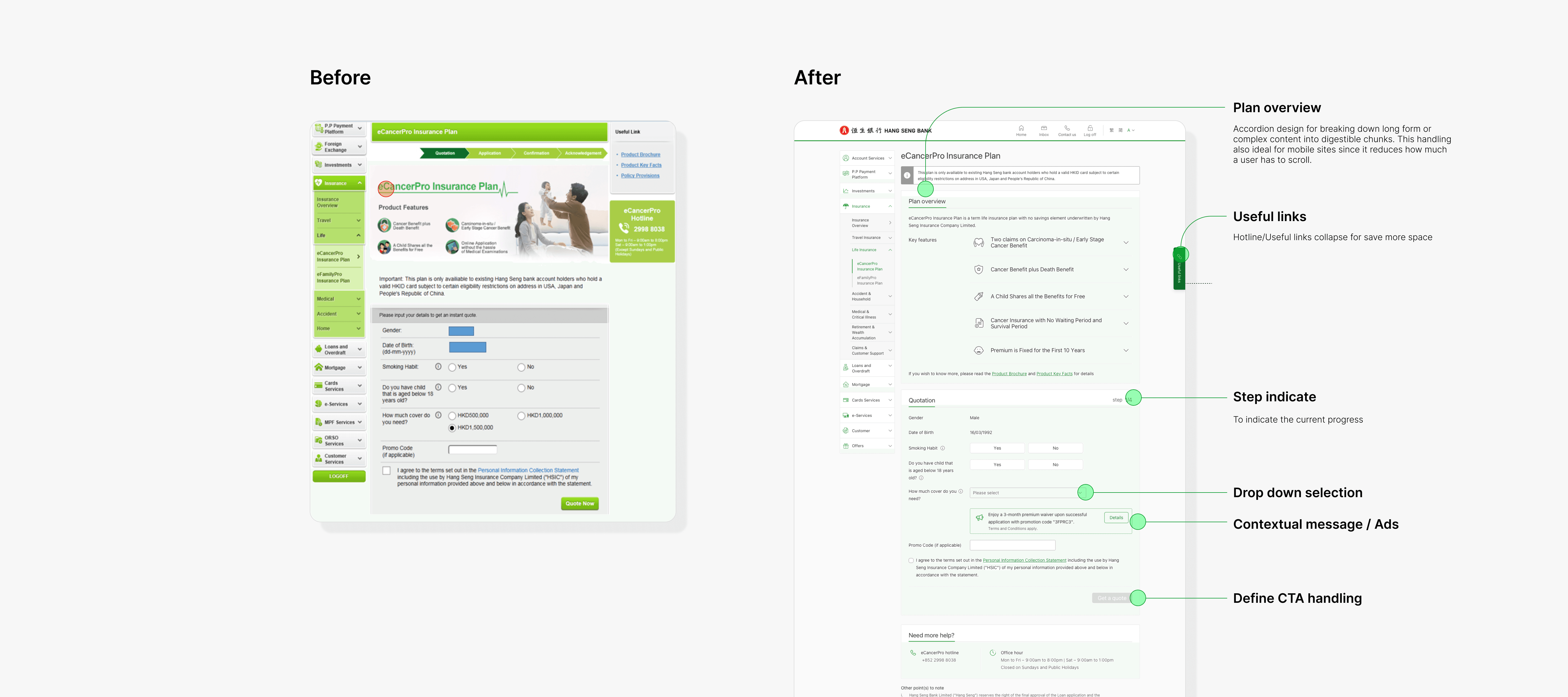
Solution
One system. Every screen. Millions of users.
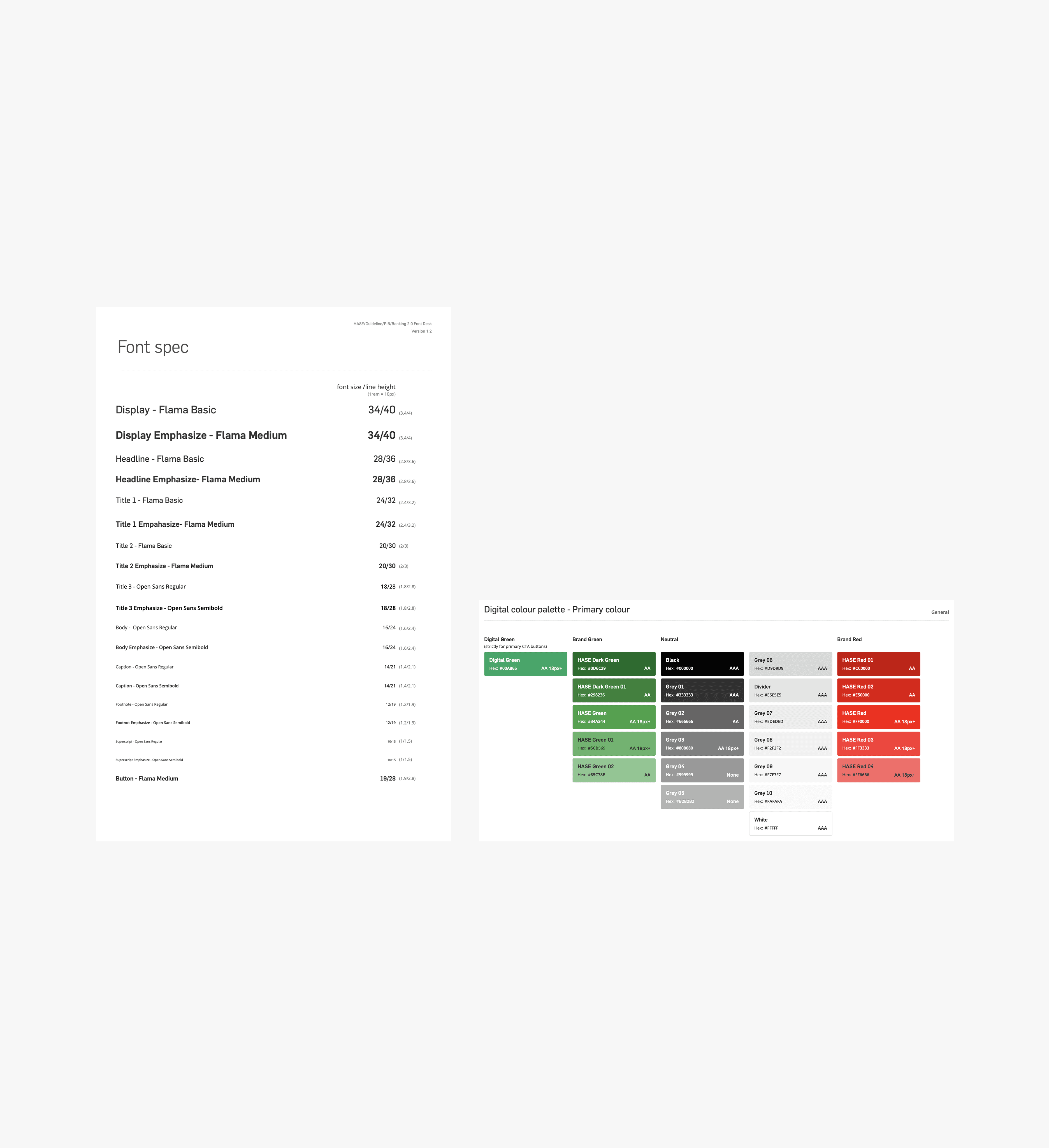
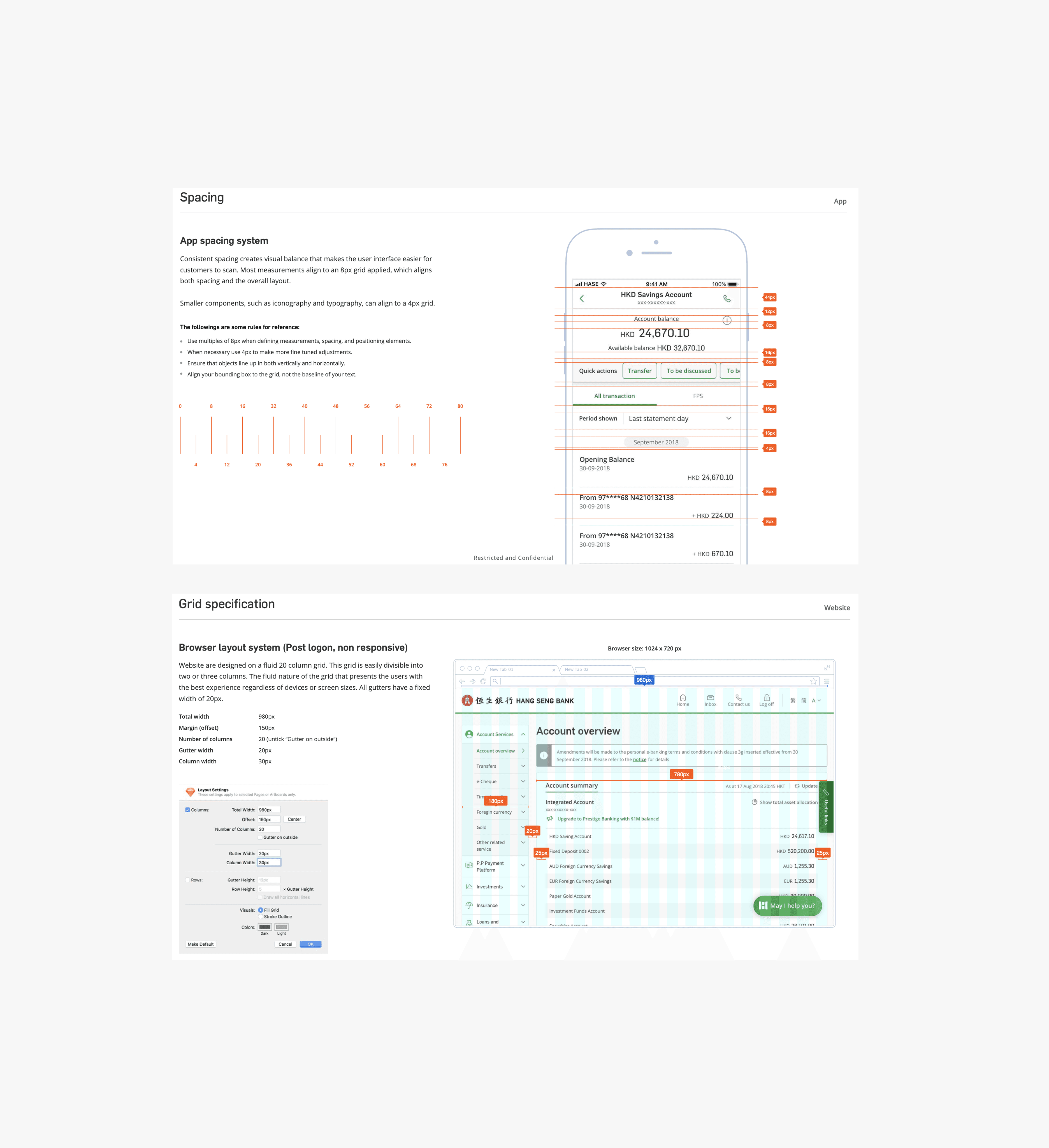
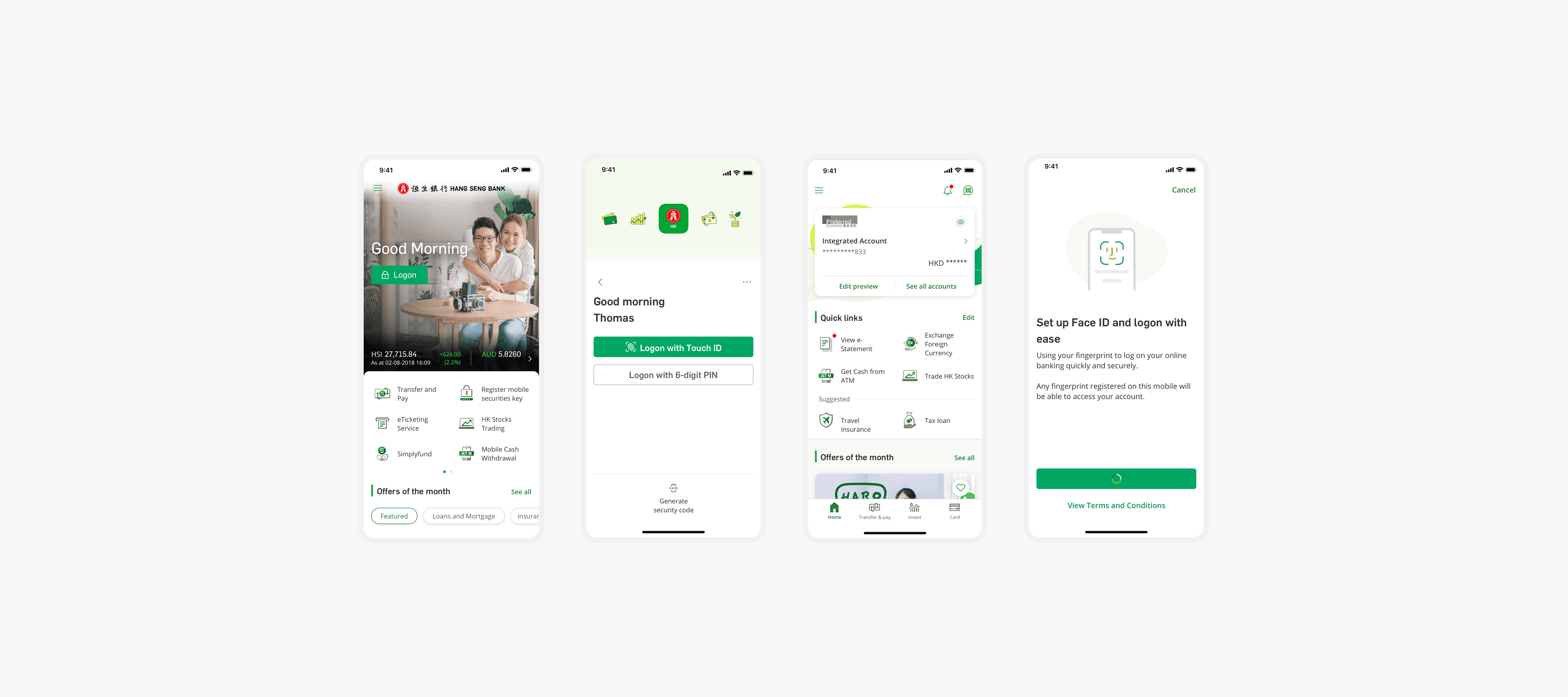
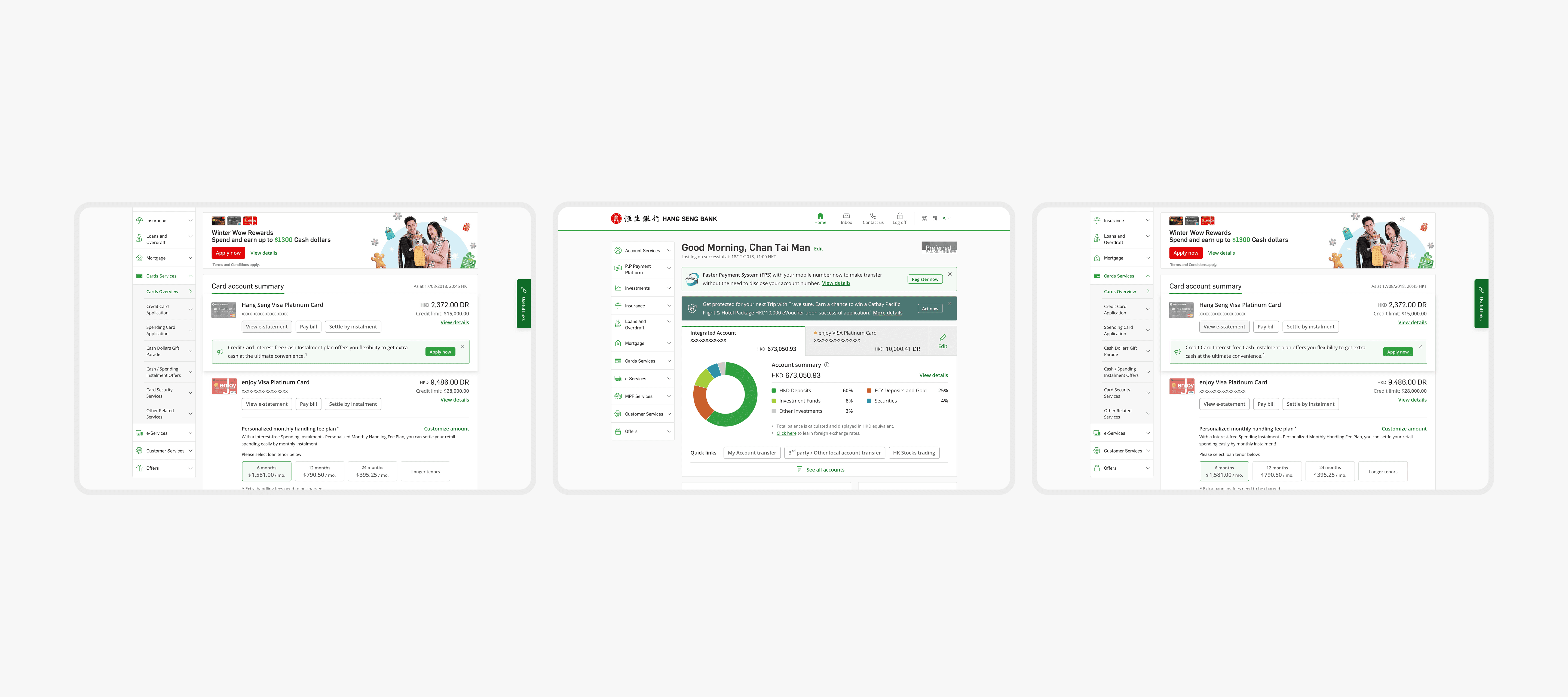
We built a scalable design system from scratch — defining components, colour tokens, and interaction patterns before touching a single screen. This kept both teams aligned and decisions consistent across mobile and web.
Visually, we reinterpreted Hang Seng's iconic green into a clean, modern interface that felt fresh without losing familiarity. Every detail was measured against one question: does this feel smart, human, and attentive?
Impact
9 designers became 18. The work spoke for itself.
By the time I transitioned off the project, the redesign was still in progress — but the foundation was set and the momentum was clear.
As Assistant UX/UI Manager, I earned direct recognition from the client for design leadership throughout the engagement. The collaboration between both teams led to a decision to double the design team from 9 to 18 designers — a signal of confidence in the direction and the working relationship we had built.
Sometimes the most meaningful impact isn't a metric. It's being trusted to scale something.