CeeTee Ai Assistant
project overview
client:
Canadian Tire
services:
AI Product
industry:
E-Commerce
role:
UI Designer
About
AI Assistant - CeeTee
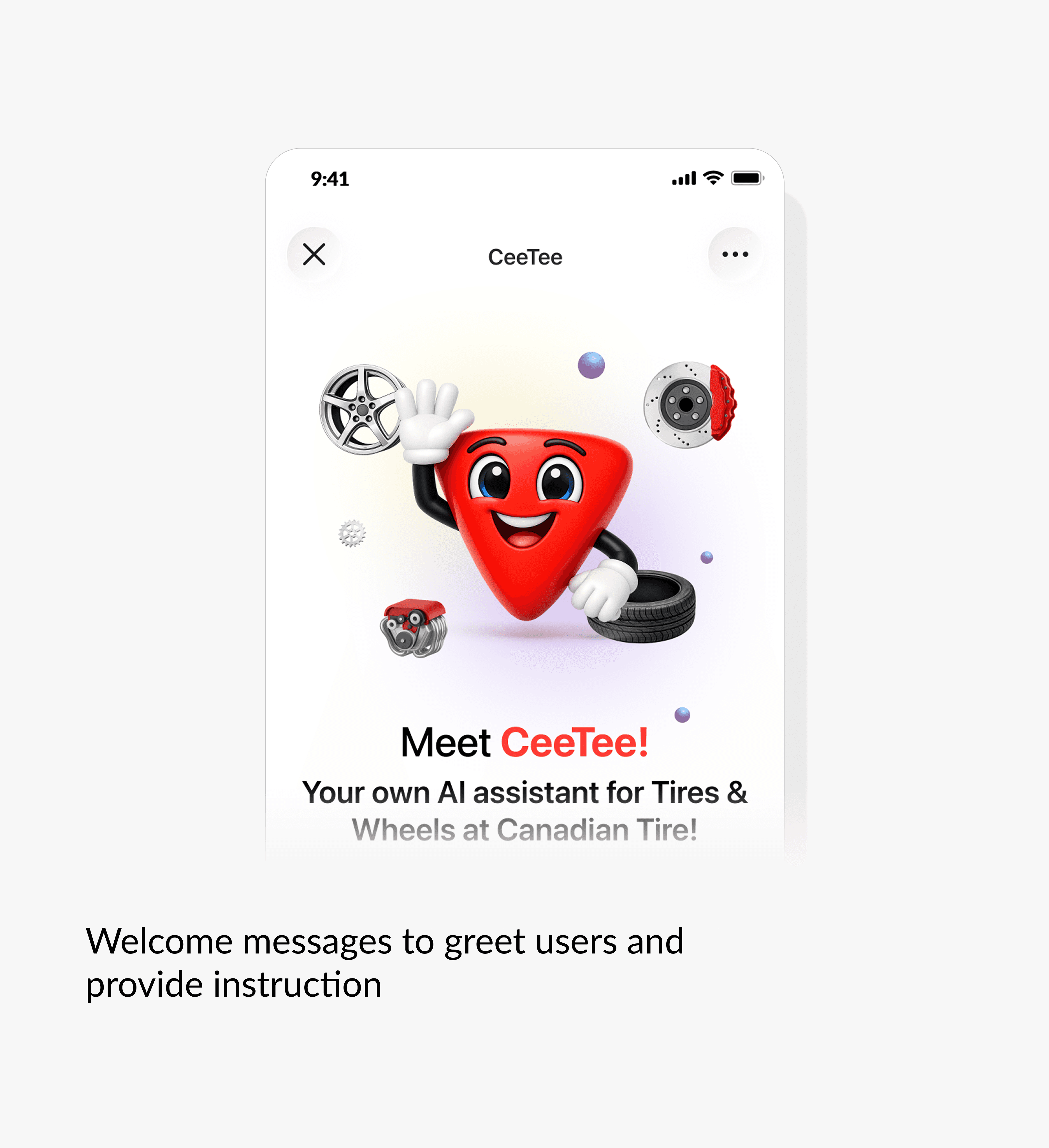
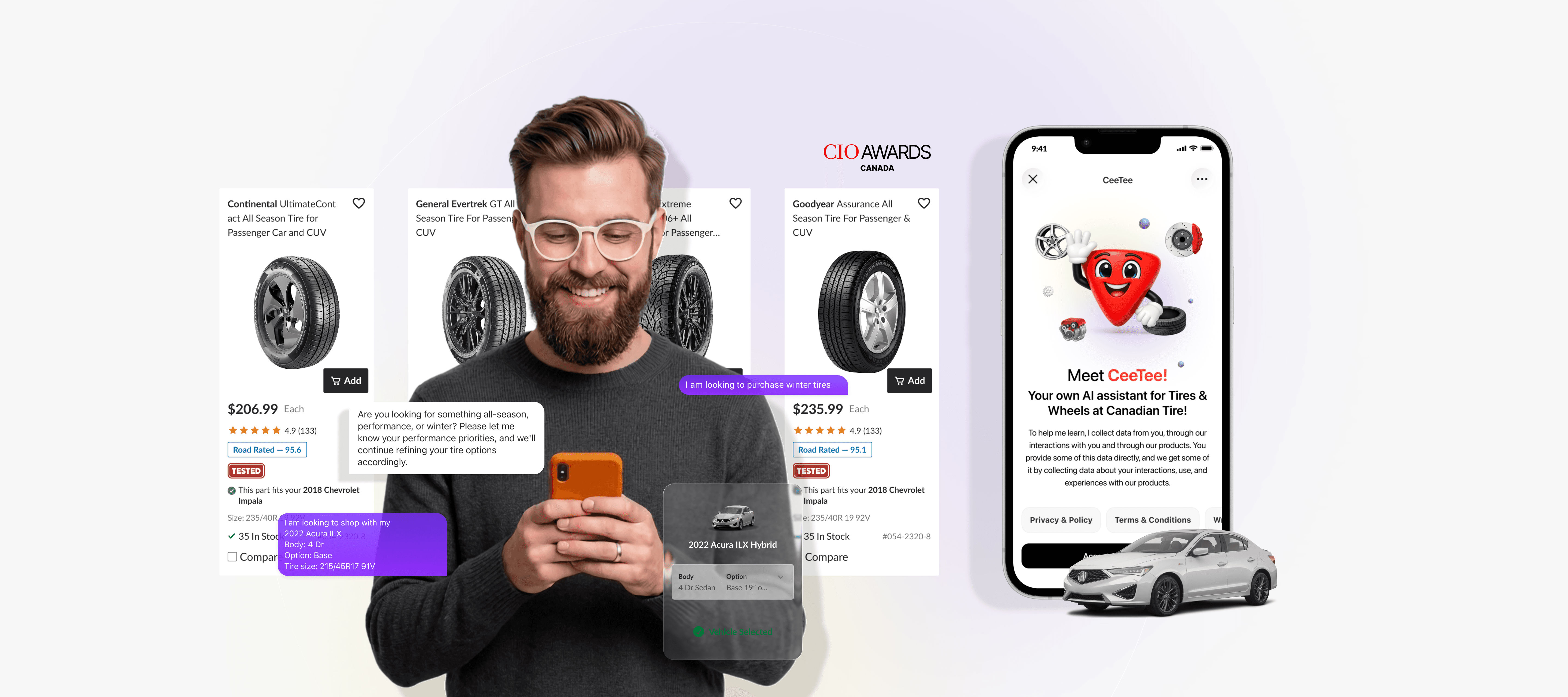
CeeTee is an easy-to-use, AI-powered shopping assistant designed to assist customers throughout their tire shopping journey, simplifying the process of finding the right tires for their vehicles, all at a click of a button.
The CeeTee shopping assistant supports tire selection, offers real-time local inventory updates, facilitates purchases and interacts with customers in a very natural and human way.
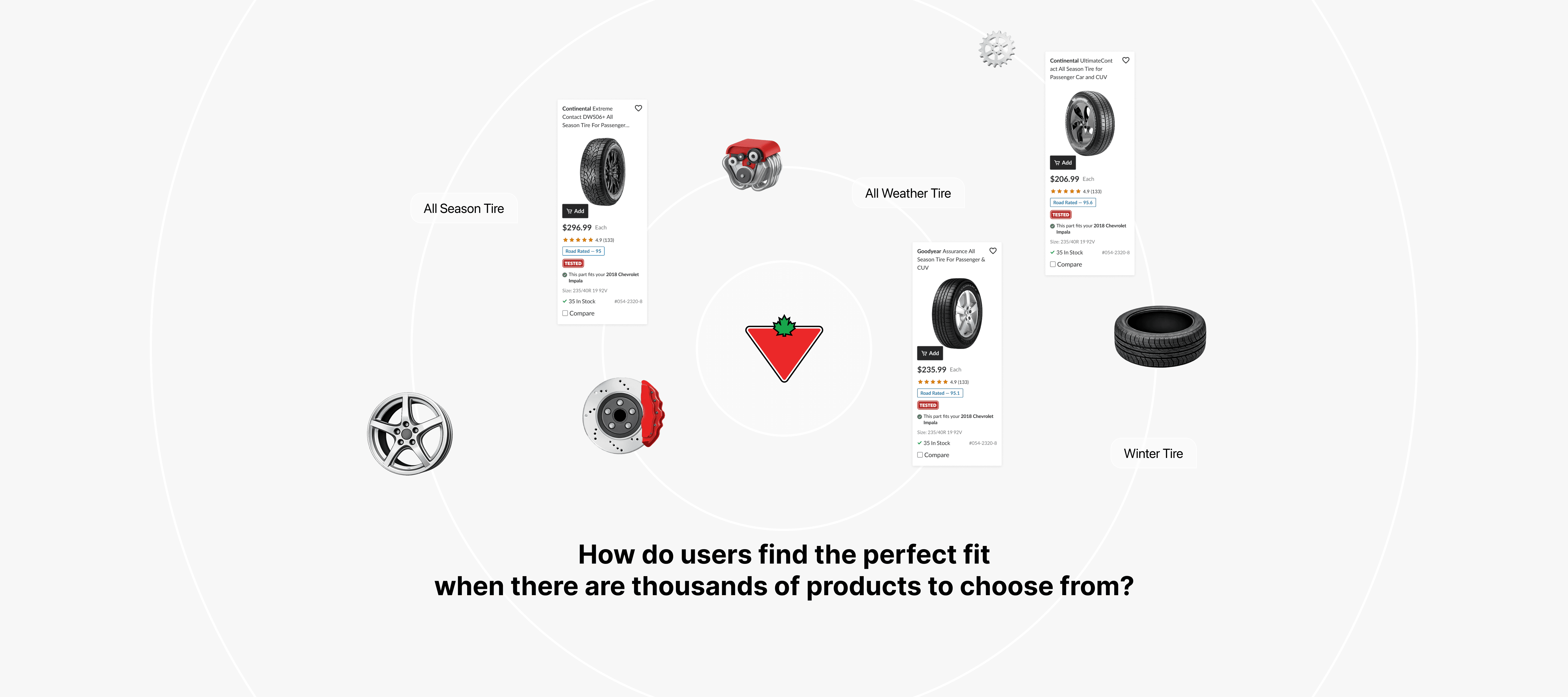
Problem
Hidden Information Creates Cognitive Friction
Traditional e-commerce customer support is slow, transactional, and disconnected from the shopping journey. Users frequently abandon purchases when they can't quickly find product information or get help — and static FAQ pages or rule-based chatbots make the experience feel cold and unhelpful.
The business question was clear: How might we build an AI assistant that not only resolves queries, but actively supports product discovery and drives conversion?
Challenge
Two tensions defined this project
Trust vs. Naturalness — Most users associate chatbots with frustrating, scripted loops. Designing a conversation that felt genuinely intelligent — not like a glorified FAQ — required rethinking how AI responses are surfaced, structured, and timed.
Support vs. Sales — The assistant needed to serve a dual role: resolve customer concerns and surface relevant products in context. Getting this balance wrong risked making it feel pushy, or worse, unhelpful. The design challenge was making product recommendations feel like a natural part of the conversation, not an interruption.
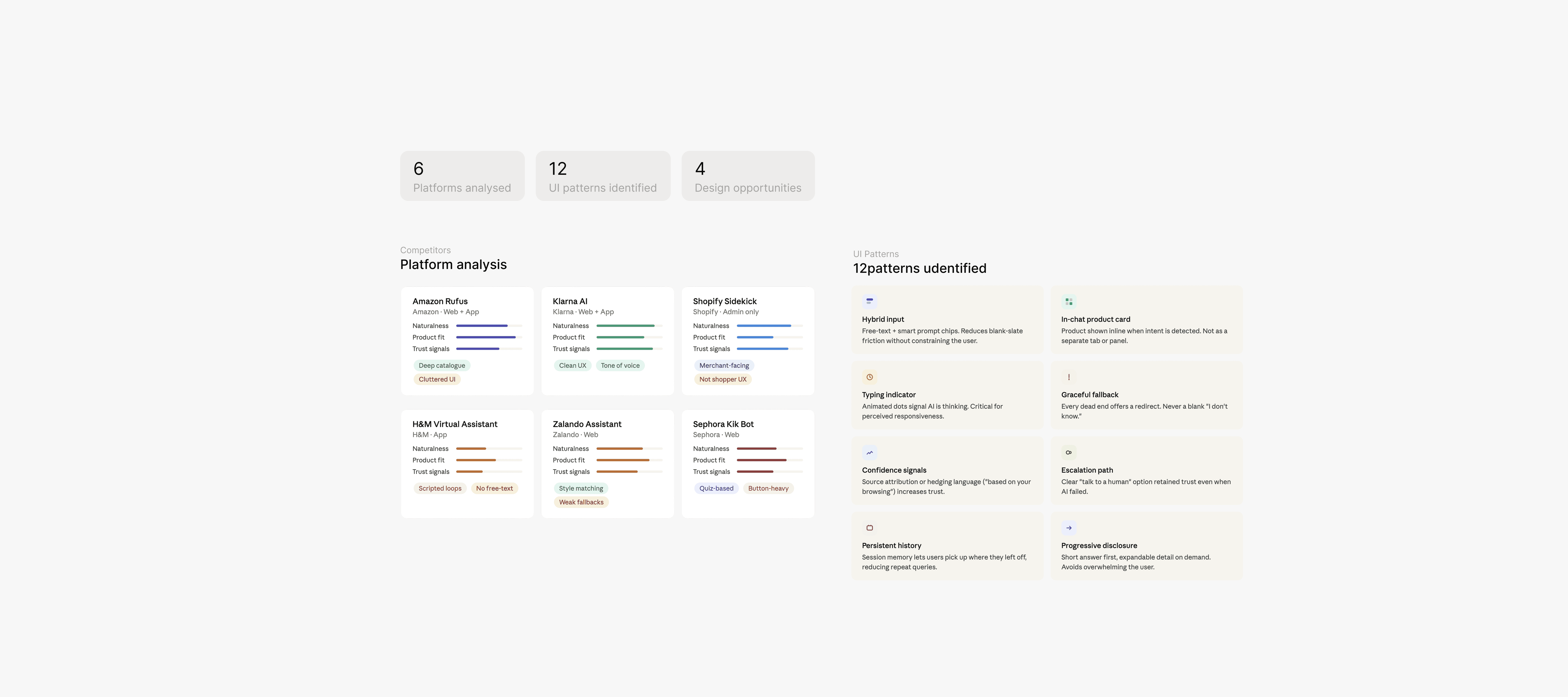
Research Insight
Three key insights shaped our design direction
Users forgive imperfect answers, but not broken flows. The biggest drop-off in competitor products wasn't inaccuracy — it was dead ends. Conversations that didn't know how to recover gracefully caused users to abandon entirely.
Product recommendations convert when contextually earned. In platforms where AI surfaced products in response to user intent (not as interruptions), click-through rates were significantly higher than banner or push-based approaches.
Transparency builds trust more than perfection. Users responded more positively to assistants that acknowledged limitations ("I'm not sure, but here's what I can help with") than those that gave confident but unhelpful answers.
HOW WE IMPROVED IT
Solution
We designed CeeTee around three core principles: conversational clarity, contextual selling, and graceful recovery.
💬 Conversational Framework
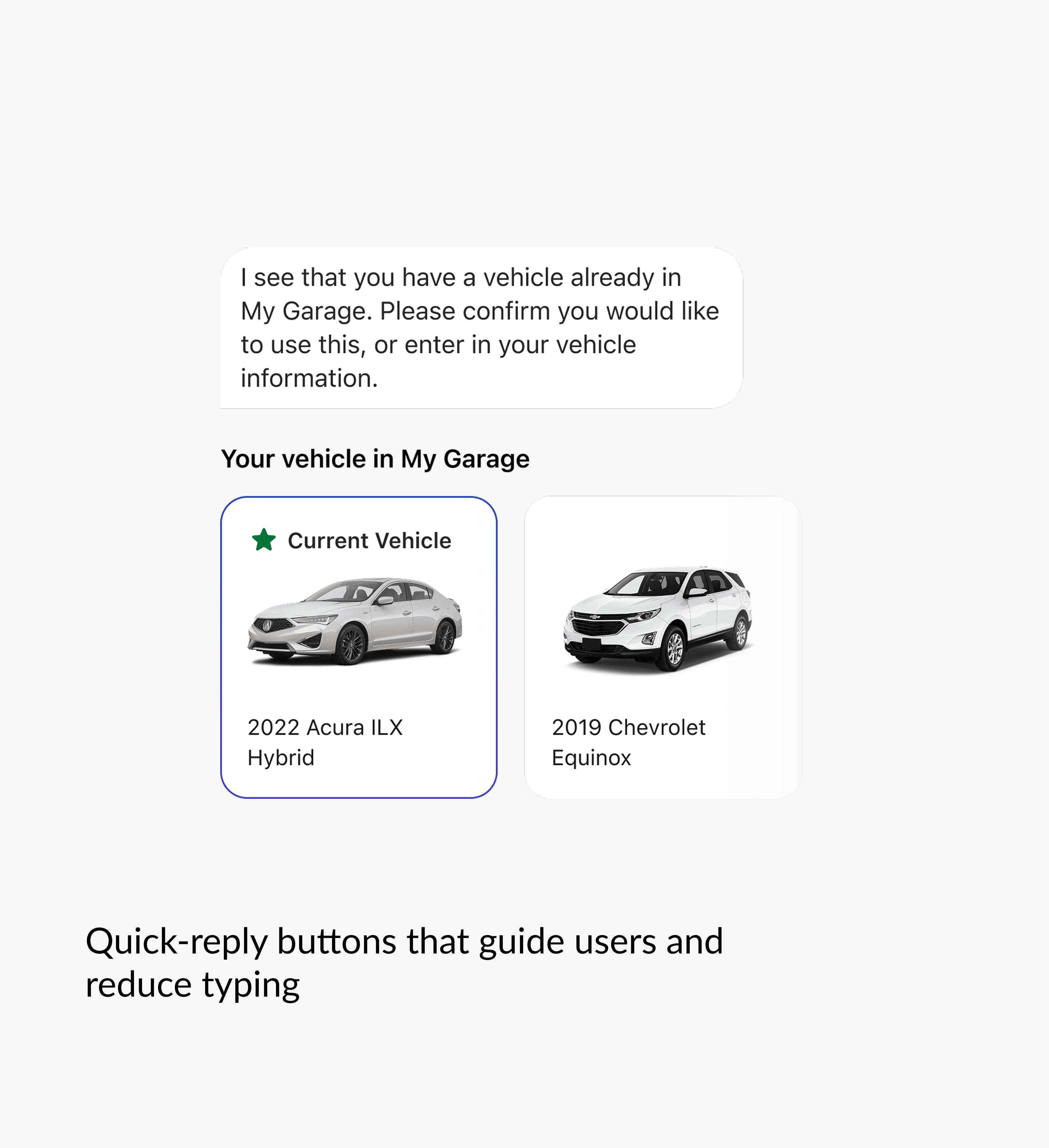
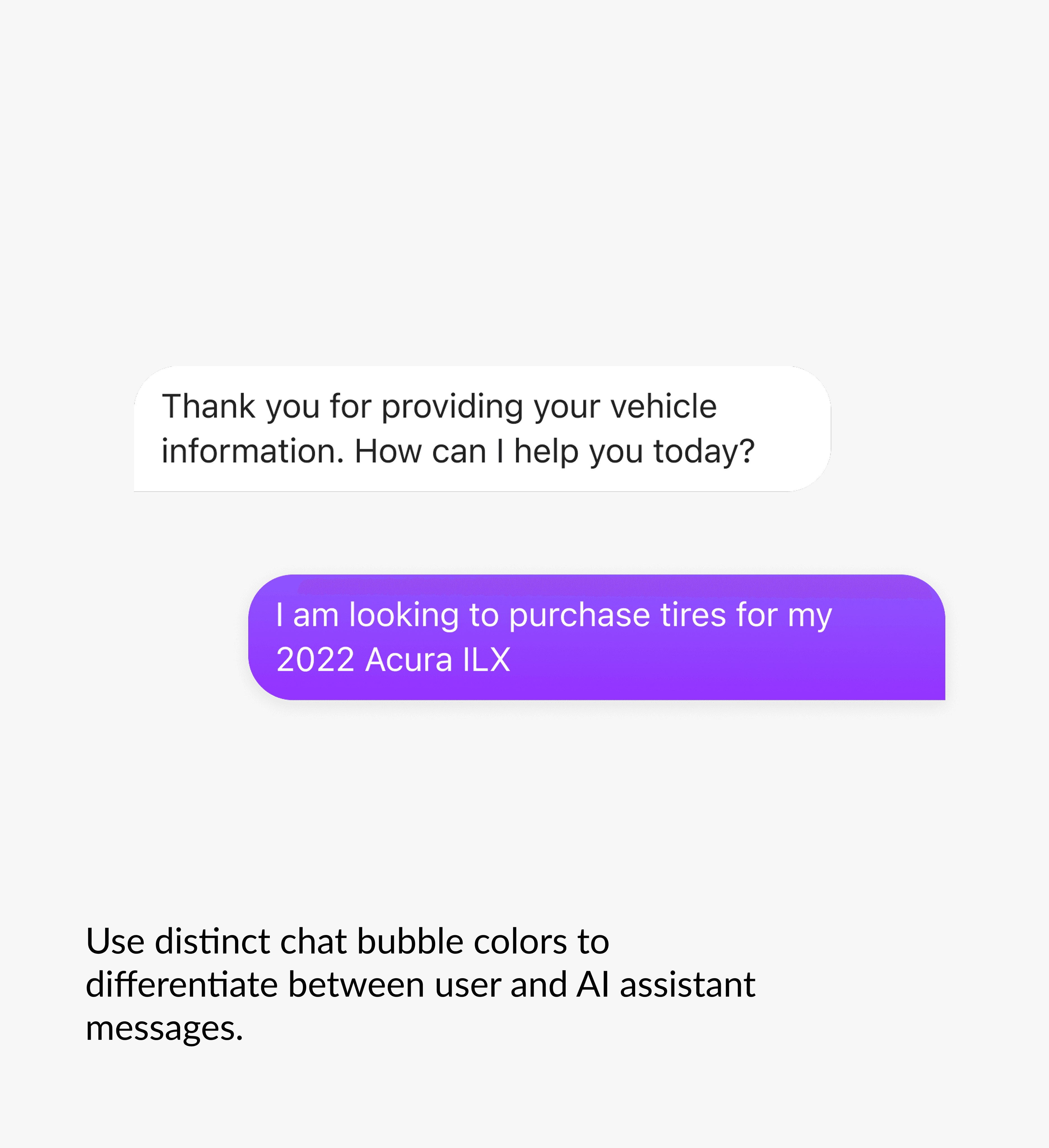
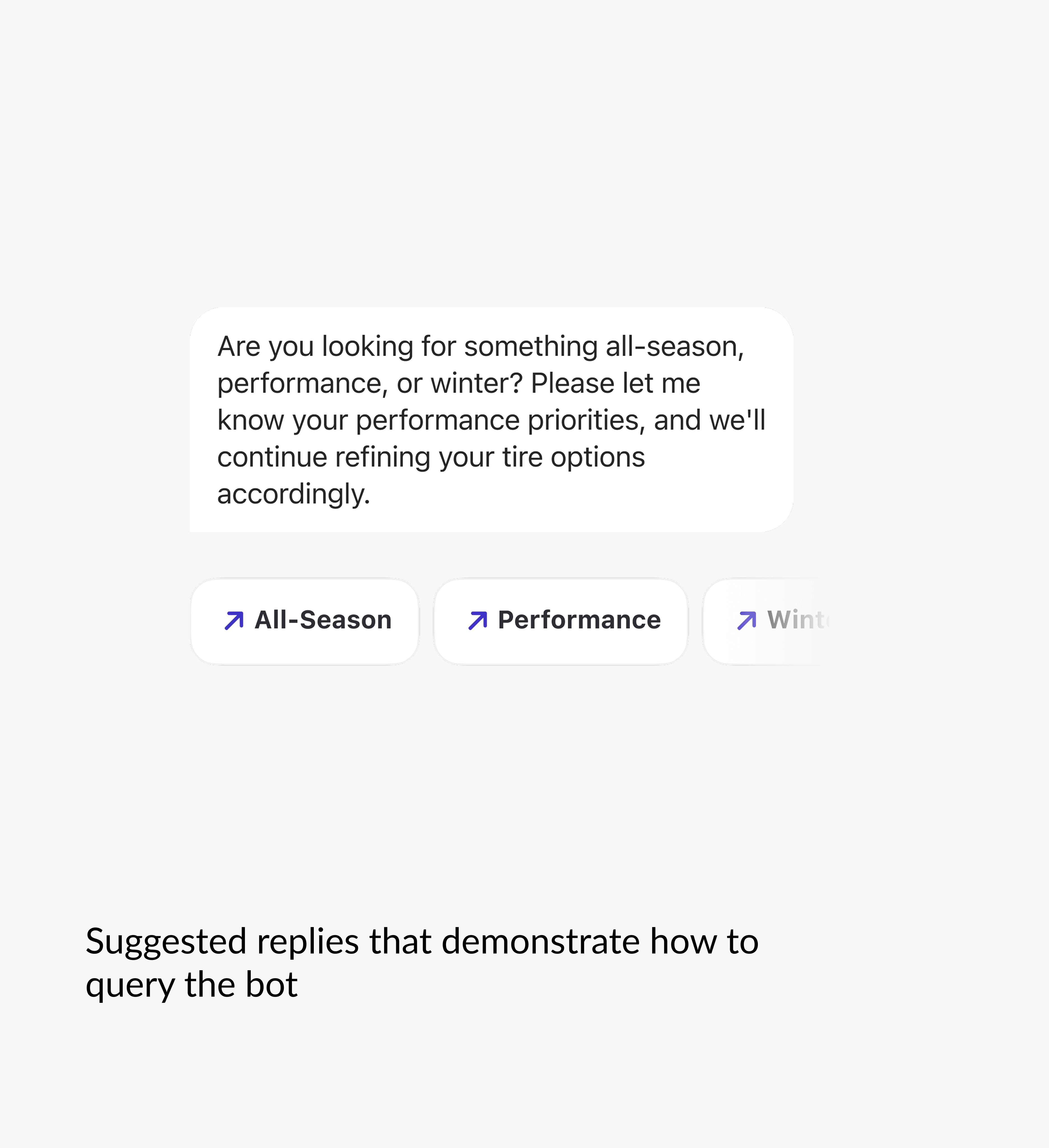
Moved away from button-heavy, decision-tree UI toward a hybrid model — free-text input with smart prompt suggestions that guided users without constraining them. This made the experience feel open and natural while reducing cognitive load.
🛍️ Contextual Product Integration
Instead of a separate "shop" mode, product cards were woven directly into the conversation flow — triggered only when user intent signalled discovery or comparison. This made recommendations feel assistive, not intrusive.
👍 Error & Fallback Design
We built a robust set of fallback states: for low-confidence responses, out-of-scope queries, and escalation to human support. Every dead end was treated as a design surface, not an edge case.
🤝 Visual Language
The UI balanced the platform's existing design system with a distinct "AI" personality — using typing indicators, progressive disclosure, and subtle animation to signal intelligence without over-promising it.
Impact
Launched to the full user base within 2024Mar, CeeTee achieved strong adoption in its first year:
~10,000 users engaged with the assistant in Year 1 700,000+ sessions — indicating strong re-engagement and habitual use
The session volume relative to user count (~70 sessions per user on average) suggests users returned repeatedly — a signal that the conversational experience was functional and trusted, not just explored once and abandoned.